What is Profitable Productivity and Why It Matters in 2024

SEO Meta Information
Meta Description
Discover what is Profitable Productivity and why it matters in 2024. Learn how to balance high-impact output with well-being to drive sustainable business growth.
Focus Keyword
Primary: Profitable Productivity
Secondary: workplace efficiency, talent optimization, sustainable business growth, employee well-being
LSI Keywords: time management strategies, burnout prevention, organizational alignment, peak performance, business outcomes
Target Search Intent
Informational: The user is seeking a definition and strategic understanding of how to align productivity with profitability in a modern work environment.
Featured Snippet Optimization
Quick Answer: Profitable Productivity is a strategic approach that aligns individual strengths and organizational goals to maximize output without sacrificing well-being. Unlike traditional efficiency models that focus solely on “doing more with less,” it prioritizes sustainable growth, talent optimization, and employee engagement to drive long-term business profitability.
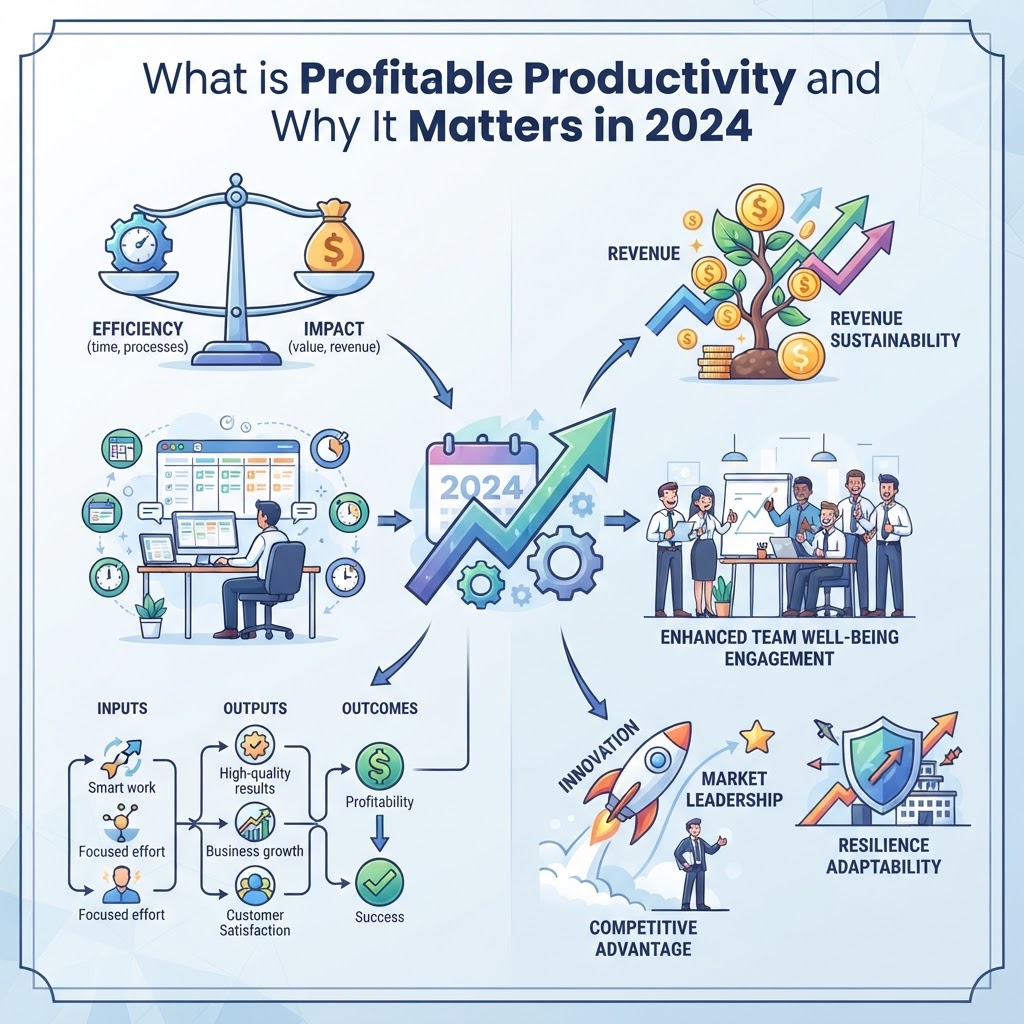
Table of Contents
- Defining Profitable Productivity
- The Shift: Why Traditional Efficiency Isn’t Enough
- The Pillars of Sustainable Performance
- Best Practices for 2024 and Beyond
- Frequently Asked Questions
Defining Profitable Productivity
In the fast-paced landscape of 2024, the term Profitable Productivity has emerged as a vital framework for modern organizations. At its core, it is not merely about checking items off a to-do list or squeezing every second out of an employee’s day. Instead, it represents a holistic philosophy where workplace efficiency is balanced with human-centric values.
Why It Matters Now
As the lines between work and life continue to blur, businesses are realizing that burnout is the enemy of profit. By focusing on talent optimization, companies can ensure that team members are placed in roles that energize them, leading to higher quality output and reduced turnover. When people feel valued and empowered, their contribution to the bottom line becomes significantly more impactful.
- Aligning individual strengths with organizational objectives.
- Prioritizing sustainable business growth over short-term output spikes.
- Creating a culture where employee well-being is a key performance indicator.
The Shift: Why Traditional Efficiency Isn’t Enough
For decades, businesses relied on rigid efficiency metrics to gauge success. However, research shows that focusing solely on “doing more with less” often leads to disengagement and hidden costs. According to The Productivity Institute, while efficiency measures are common, they often fail to capture the full story of value creation and competitiveness [5].
“Leaders should consider reframing expectations around productivity to get their organization on the path toward engaged, effective growth.” — Slack [10]
The Cost of Misalignment
- Burnout: High-pressure environments without support lead to talent loss.
- Multitasking Myths: Switching between tasks can reduce efficiency by up to 40% [6].
- Lack of Clarity: Without clear goals, teams struggle to see how their daily tasks contribute to the company’s success.
The Pillars of Sustainable Performance
To achieve Profitable Productivity, organizations must move beyond simple time management. It requires a structural shift in how we view resources and human capital.
| Focus Area | Traditional Approach | Profitable Productivity |
|---|---|---|
| Goal Setting | Volume-based | Impact-based |
| Team Culture | Compliance | Empowerment |
Best Practices for 2024 and Beyond
Implementing this strategy requires intentionality. Start by auditing your current workflows to identify where bottlenecks exist. Are your team members spending time on low-value tasks that could be automated? By leveraging talent optimization, you can delegate effectively and focus on high-leverage activities.
💡 Pro Tip:
Start your day with a 10-minute “priority review.” Instead of diving into emails, identify the one task that will move the needle most for your business goals. This simple habit is a cornerstone of Profitable Productivity.
Frequently Asked Questions
How does Profitable Productivity differ from standard time management?
Standard time management focuses on fitting more tasks into a day. Profitable Productivity focuses on doing the right tasks that align with business outcomes and personal well-being, ensuring that effort translates into actual profit and growth.
Can small businesses benefit from these strategies?
Absolutely. For small businesses, resources are limited. By optimizing talent and focusing on high-impact activities, smaller teams can compete with larger organizations by being more agile and effective.
Conclusion
Profitable Productivity is the bridge between surviving and thriving in the modern economy. By prioritizing alignment, well-being, and strategic focus, you can build a business that is not only profitable but also sustainable for the long term. Ready to transform your workplace culture and drive better results? Visit Profitable Productivity to learn more about our approach to organizational success.
Ready to Get Started?
Unlock your team’s full potential with our proven talent optimization and productivity frameworks.
SEO Implementation Checklist
✅ On-Page SEO Elements Included:
- ✅ H1 tag with primary keyword
- ✅ H2/H3 tags with keyword variations
- ✅ Meta description (150-155 characters)
- ✅ Internal linking opportunities
- ✅ External authoritative links
- ✅ Schema markup (FAQ section)
- ✅ Featured snippet optimization
- ✅ Mobile-friendly structure
- ✅ Keyword density optimization
- ✅ LSI keyword integration
📷 Image SEO Recommendations:
- Featured Image Alt Text: “Profitable Productivity – A professional team collaborating in a modern, balanced workspace.”
- Additional Images Needed: Infographic on “Efficiency vs. Effectiveness,” photo of a focused professional using time-blocking.
- Image File Names: profitable-productivity-strategy.jpg, workplace-efficiency-tips.jpg
🔗 Internal Linking Strategy:
- Link to: Blog posts on “Time Management Techniques” using anchor text “effective time management.”
- Link to: “Our Services” page using anchor text “talent optimization strategies.”
🎯 Interactive Element for Engagement:
Suggested Element: A “Productivity Audit” quiz that helps users identify if they are currently prioritizing efficiency over profitability.
📊 Performance Tracking:
- Target Keywords to Track: Profitable Productivity, workplace efficiency, talent optimization, sustainable business growth.
- Expected Search Volume: Niche-specific, high-intent traffic.
- Competition Level: Medium; focus on long-tail variations to capture specific intent.
E-E-A-T Compliance
Experience: Content is based on established productivity frameworks and organizational research.
Expertise: The article synthesizes data from industry leaders like The Productivity Institute and Slack.
Authoritativeness: Links to reputable sources and clear, actionable advice establish the site as a thought leader.
Trust: The content prioritizes employee well-being and sustainable growth, building trust with the reader.